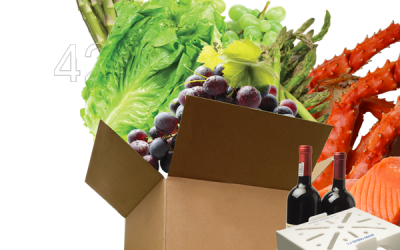
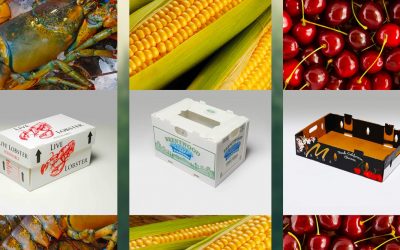
Food packaging plays an important role in protecting fresh produce as it moves from the field through cooling, storage, transportation and distribution. For growers and packers of corn, broccoli, celery, cilantro and other wet vegetables, packaging must also withstand moisture, ice and refrigerated conditions without losing strength.
Understanding FDA food packaging requirements can help produce businesses evaluate packaging materials, verify supplier documentation and avoid unsupported compliance claims. These requirements primarily address substances that may contact food and migrate into it. Labeling rules may also apply, particularly when food is packaged for retail sale.
SeaCa Plastic Packaging manufactures polypropylene corrugated cartons for wet-vegetable applications. These cartons are designed to maintain their structural integrity throughout the cold chain while providing a recyclable alternative to wax corrugated packaging.
What FDA Food Packaging Requirements Cover
The U.S. Food and Drug Administration regulates food packaging under the Federal Food, Drug, and Cosmetic Act. The agency’s rules cover substances used in food-contact materials, including plastics, coatings, adhesives, colorants and other packaging components.
The FDA does not approve finished cartons as complete products. Instead, the individual substances used to manufacture food-contact packaging must have a valid regulatory basis for their intended use. This may come from an applicable food-additive regulation, an effective Food Contact Substance Notification or another recognized authorization.
Requirements can vary based on what the package contains and how it will be used. A material suitable for refrigerated vegetables may not automatically be suitable for high-temperature processing or another type of food. Manufacturers and food businesses must consider the complete application rather than relying on a broad claim that a material is “FDA approved.”
FDA requirements for packaging safety are also different from food-labeling rules. Food-contact regulations address whether packaging components are safe under their intended conditions of use. Labeling regulations govern the information displayed on certain packages offered to consumers.
What Are Food-Contact Substances and Materials?
A food-contact substance is generally any substance intended for use as a component of materials used in manufacturing, packing, packaging, transporting or holding food, when that use is not intended to have a technical effect in the food. Food-contact materials are the finished materials containing those substances.
For a polypropylene corrugated carton, relevant components may include the base resin, colorants, printing inks, coatings and adhesives. Some components may not touch the produce directly, but their placement and potential to migrate through packaging layers still need to be considered.
Chemical migration occurs when a substance transfers from packaging into food. The amount that may migrate depends on factors such as the substance, food type, temperature and length of contact. FDA-compliant food packaging must therefore be evaluated under conditions that represent how it will be used.
How Food-Contact Substances Are Authorized
Food-contact substances may have several possible regulatory pathways. A substance may be covered by a food-additive regulation in Title 21 of the Code of Federal Regulations, an effective Food Contact Substance Notification, a prior sanction, a Threshold of Regulation exemption or an applicable Generally Recognized as Safe (GRAS) determination.
The Food Contact Substance Notification program is the primary pathway for many new food-contact uses. A manufacturer or supplier submits identity, intended-use, migration, exposure, toxicology and environmental information to the FDA. The agency then has 120 days to review the notification. If the FDA does not object during that period, the notification becomes effective.
An effective notification applies to the identified substance, manufacturer or supplier and conditions of use. It does not automatically authorize every version of the material or every company that may produce it. The FDA maintains a public inventory of effective food-contact substance notifications that businesses can consult alongside supplier records.
A Threshold of Regulation exemption may apply when the expected dietary concentration of a substance is sufficiently low and other criteria are met. GRAS status may also provide a regulatory basis for a specific use. Neither category should be assumed without appropriate supporting evidence.
Intended Food Type and Conditions of Use
Food type and conditions of use are central to food-contact compliance. FDA classifications account for characteristics such as whether a food is aqueous, acidic, fatty or alcoholic. Conditions of use account for contact time and temperature, ranging from high-temperature processing to refrigerated or frozen storage.
Wet vegetables commonly pass through a hydro-shower or ice-injector before entering a cooler. Cartons may then remain in contact with cold, damp produce during storage and transportation. These conditions should be represented when assessing whether the carton and its components are suitable for the intended application.
A supplier declaration should identify any limitations on food type, temperature or duration of contact. Packaging that has only been evaluated for refrigerated use should not be assumed suitable for cooking, hot filling or other higher-temperature applications.
Testing, Migration and Supplier Documentation
Migration studies can help estimate how much of a packaging substance could transfer into food. Testing may use food simulants chosen to represent the intended product, along with temperatures and contact periods that reflect anticipated use. Calculations, existing scientific data and migration modeling may also support a safety assessment.
Not every finished package is subject to an identical testing protocol. The necessary evidence depends on the substance, its regulatory basis and the intended use. For wet-vegetable cartons, documentation should address refrigerated exposure and expected contact with moisture, cold water or ice where relevant.
Growers and packers should request appropriate compliance documents from packaging suppliers. Records may include specifications, declarations of compliance, applicable CFR citations, effective FCN numbers and information about inks, adhesives and colorants. Businesses should review whether the documents cover the exact material and intended application rather than a similar product.
Good Manufacturing Practices for Food-Contact Packaging
Food-contact materials must be produced according to good manufacturing practices. Under 21 CFR 174.5, the quantity of a substance used should not exceed what is reasonably required to achieve its intended technical effect. Materials must also be suitable for their intended use.
A packaging manufacturer’s controls may include approved raw-material specifications, documented cleaning procedures, contamination prevention and inspection of finished products. Lot identification and traceability can help connect resin, additives and production records to a finished carton.
Third-party food-safety or packaging certifications may provide additional evidence of a structured quality system. However, a certification does not replace the need to establish an appropriate FDA regulatory basis for each food-contact component.
What Is Legally Required on Food Packaging?
The answer depends on whether the carton is a shipping container or a consumer-facing retail package. A bulk produce carton used between a grower, distributor and retailer may have different labeling obligations than a sealed package sold directly to consumers.
Depending on the product and sales format, required retail labeling may include a statement of identity, net quantity, ingredient information and the name and address of the manufacturer, packer or distributor. Allergen declarations are required when a packaged food contains an applicable major food allergen. Plain vegetables such as broccoli, celery or corn generally do not create the same allergen-labeling concerns as multi-ingredient foods.
Nutrition Facts requirements also depend on the product and any applicable exemption. Certain raw agricultural commodities and qualifying businesses or products may be exempt from nutrition labeling. Claims made on the label can affect whether an exemption remains available.
Businesses asking about new FDA food-labeling requirements should distinguish finalized rules from proposals. For example, the FDA’s front-of-package Nutrition Info box remains a proposed rule as of August 2026 and should not be treated as a current requirement. Packers should confirm obligations for their specific product, package and distribution model with a qualified regulatory professional.
FDA Considerations for Recycled Plastic Packaging
Recyclability and food-contact compliance are related but separate issues. A carton does not become suitable for food contact simply because it is recyclable, and recyclability is not evidence of any FDA authorization.
When post-consumer recycled plastic will be used in a food-contact application, the FDA considers whether contaminants could remain in the material, whether the recycled feedstock was originally suitable for food contact and whether its additives comply with applicable requirements. Source controls, cleaning effectiveness and intended conditions of use may all be relevant.
The FDA reviews proposed recycled-plastic processes on a case-by-case basis and may provide favorable opinions about their suitability. Recycled food-contact material must ultimately satisfy the same safety standard as material produced from virgin resin.
SeaCa’s CORR program supports the collection of used polypropylene corrugated cartons so the material can be reintroduced into new packaging. This environmental advantage should be discussed separately from the regulatory basis for any material intended to contact food.
Choosing Packaging for Wet-Vegetable Operations
Compliance is one part of selecting an effective produce carton. Growers and packers also need packaging that can tolerate cold water, ice, cooler storage, stacking and transportation.
SeaCa’s polypropylene corrugated produce packaging is designed for wet-vegetable operations. Unlike wax corrugated cartons that may weaken after extended moisture exposure, plastic corrugated cartons retain their shape and strength in wet cold-chain conditions.
Custom sizing can also reduce wasted space and give each commodity the support it requires. SeaCa develops right-size cartons for individual customer needs and offers quick lead times, helping growers respond to harvest schedules and changing packaging demand.
Before choosing a carton, produce operations should verify:
- The regulatory basis for all applicable food-contact components
- Suitability for the intended food, temperature and contact period
- Documentation for resins, inks, adhesives and colorants
- Manufacturing and traceability controls
- Labeling obligations for the product and sales format
- Performance under hydro-shower, ice-injector and refrigerated conditions
Find the Right Food-Contact Packaging for Your Produce
FDA food packaging requirements are application specific. Growers and packers should evaluate the complete carton, how it will contact the food and the conditions it will encounter throughout the cold chain.
SeaCa Plastic Packaging combines polypropylene corrugated construction, custom carton designs, moisture-resistant performance and the backing of a six-generation family packaging business founded in 1889. SeaCa’s recyclable cartons provide a dependable alternative for corn, broccoli, celery, cilantro and other produce exposed to water, ice and refrigerated storage.
Contact SeaCa Plastic Packaging to discuss your commodity, cooling process and packaging requirements.