Moisture-resistant packaging is designed to limit liquid, humidity, and water vapor ingress. Packaging is more than protection; it’s a vital part of sustainability and efficiency in modern industries. It protects sensitive goods from damage such as molding, caking, or corrosion during storage and transit. The spectrum of moisture protection within this type of packaging is measured by its Water Vapor Transmission Rate (WVTR). This ranges from basic moisture containment to near-complete moisture barrier performance. A lower value indicates a stronger, better-performing moisture barrier.
Choosing moisture-resistant packaging often involves weighing cost and performance, as higher barrier materials can increase costs. WVTR is a key metric used to define a material’s effectiveness at moisture protection in logistics and to quantify its resistance to condensation. Moisture-resistant packaging is critical across industries due to logistics that move goods between controlled and uncontrolled environments—such as shipping containers, warehouses, and trucks—with varying humidity levels. This can cause temperature fluctuations and lead to condensation, also known as container rain, and prolonged exposure to this moisture can ruin a product.
THE IMPACT OF MOISTURE ON FOOD PRODUCTS, PACKAGING AND PROFITABILITY
Moisture-related damage to food products is a significant issue, with estimates indicating that as much as 12% of container cargo damage is labeled as moisture related. The resulting financial loss from discarded products can reach millions of dollars annually. Moisture-related damage is often considered a silent threat to packaging integrity and profit margins.
Moisture control is critical to maintaining packaging integrity. As reported by a study in Academia, an increase in humidity of 50% can reduce the stacking strength of a corrugated cardboard box by up to 60% based on box crush testing. Condensation is a major issue in the supply chain when transporting goods or moving products from refrigerated storage to a loading dock or ambient environment. In addition to weakening packaging, humidity and condensation can promote mold and bacterial growth, making products unsafe and requiring disposal. Moisture-resistant packaging works to counteract this issue and prevent loss, which protects profit margins.
KEY PROPERTIES THAT DEFINE EFFECTIVE MOISTURE-RESISTANT PACKAGING
Cold chain environments are defined by the Centers for Disease Control and Prevention as maintaining temperatures between 36–46 degrees Fahrenheit, with lower temperatures required for frozen conditions. Condensation can form when chilled items are exposed to ambient air during handling and shipping, which underscores the importance of proper packaging selection.
Effective moisture resistance in packaging is characterized by materials that are engineered to maintain structural integrity (even under harsh conditions), block water vapor and control permeability – all with a low WVTR. Common materials that have these design elements include high-density polyethylene (HDPE) or polypropylene (PP). Cold chain packaging must support the safe, reliable transport of fresh produce and other food goods while maintaining product integrity. Any functional packaging should include the following moisture barrier properties:
- Resistance to Condensation: This is especially important when transporting goods across varying temperature conditions. Moisture-resistance packaging should be composed of non-absorbent materials like plastic films or expanded polystyrene to prevent condensation from compromising the structure’s integrity.
- Resistance to Direct Water Exposure: Any functional packaging needs to be resistant to water when directly exposed to it, such as during shipping in rain or snow. Specialized films, wax coatings and more are used to repel liquid water, as are seals and various materials for packaging design like molded polypropylene.
- Stability, Even Among Temperature Fluctuations: Cold chain packaging must transition between different environments during transport. Having packaging that maintains its structural stability is necessary for maintaining a stable internal temperature and maintaining product quality.
Material selection for packaging and overall product design involves balancing performance, durability, and cost. Choosing materials like waterproof corrugated packaging that maintain product freshness while remaining cost-effective is essential.
COMMON TYPES OF MOISTURE-RESISTANT PACKAGING MATERIALS
Moisture-resistant packaging selection is not one-size-fits-all. Instead, it should be application-driven, based on the product’s specific sensitivity, the environmental exposure it will endure and the handling requirements. Below are common types of moisture-resistant packaging materials, along with a comparison of their barrier performance:
- Plastic-Based Materials: This type of material includes widely used solutions like polyethylene (PE) and polypropylene (PP). These materials are versatile, offering flexibility and durability while providing strong moisture resistance, making them suitable for many industries.
- Metalized Films and Foils: These contain a high-performance barrier and protect against not only moisture but also UV exposure, oxygen and more. They are more costly but can often be recycled, depending on their application.
- Coated Paper Solutions: This is a more affordable option compared to films and foils; however, it only provides moderate moisture resistance. This type of packaging may not be a good solution for high-moisture environments, and there are also sustainability tradeoffs to consider pertaining to the barrier coating.
- Corrugated Plastic: This solution is highly versatile and provides a superior, high-performance alternative to wax-coated corrugate (more traditional). Corrugated plastic packaging is designed for demanding supply chains that require moisture resistance, maximum durability and resilience. Corrugated plastic, unlike wax-coated options, does not weaken over time as it is a non-porous, lightweight solution that effectively maintains its structural integrity even in harsh environments.
Each application should be evaluated individually based on product-specific requirements.
HOW SUPPLY CHAIN CONDITIONS INFLUENCE MOISTURE RISK
The shipping and packaging supply chain is an interconnected network that moves products through various stages, from production to consumption. It involves production, processing, packaging, distribution, and retail. Each step of this process presents opportunities for quality breakdown, especially related to moisture exposure. Moisture exposure points include transitions between cold storage and ambient conditions, which can create condensation. Common problem areas include long-haul and ocean freight, which can result in prolonged environmental exposure. Outdoor storage is also risky as packaging can be exposed to humidity and rain.
Despite environmental stressors, packaging must be able to withstand changes in humidity levels, temperature fluctuations, mechanical handling impacts, such as compression, drops and vibration, along with other factors that can compound moisture-related risks and damage. Packaging must be engineered for real-world logistics, including palletization, stacking, and repeated handling in humid or wet environments.
To ensure packaging does all this and gets through the supply chain process effectively, there are standards and guides in place set forth by the American Society for Testing and Materials (ASTM) and the International Safe Transit Association (ISTA) that are used to validate packaging performance under simulated conditions. This provides assurance for companies that the packaging will remain reliable across different supply chain scenarios and will prevent mold growth and maintain product integrity.
BEST PRACTICES FOR PREVENTING MOISTURE DAMAGE IN PACKAGING
There are many ways to ensure packaging performs as intended and is less likely to be damaged when shipping perishable goods. The following are some of the best practices to keep in mind:
- Proper Sealing and Closure: Even high-performance materials can be compromised with poor sealing and gaps or with inconsistent handling, leading to moisture ingress.
- Protective Elements: Another way to bolster the effectiveness of package design is using additional protective elements like desiccants, liners or moisture-absorbent pads, which can create a barrier and actively manage internal humidity levels with packaging.
- Balance Ventilation and Moisture Retention: It’s important to properly balance ventilation with moisture retention. For example, while airflow can work to reduce condensation, it can also introduce external humidity in some environments.
- Storage Best Practices: Key strategies for product storage include keeping products in controlled indoor environments and using elevated pallets. This prevents moisture absorption from surrounding conditions and the floor.
- Packaging Design: Considerations like structural reinforcement and drainage are important to maintaining structural integrity in wet conditions, which in turn will support consistent performance during handling and transport.
Effective moisture protection depends on both operational processes and material selection. Performance depends on both design and how packaging is handled and stored throughout the supply chain, in secondary packaging in cold chains or even as used in farmers markets.
CHOOSING THE RIGHT MOISTURE-RESISTANT PACKAGING FOR YOUR INDUSTRY
Choosing the right moisture-resistant food packaging requires matching materials to product sensitivity, transit conditions, and shelf-life requirements. The following are some key decision-making factors to consider when evaluating the types of packaging you’ll use for your brand:
- Moisture-resistance requirement for the product
- Product sensitivity throughout the shipping process
- Expected exposure conditions including outdoor environments or those that are cold or wet
- Cost versus lifecycle value
- Any sustainability requirements
- Compatibility with emerging EPR regulations in select states
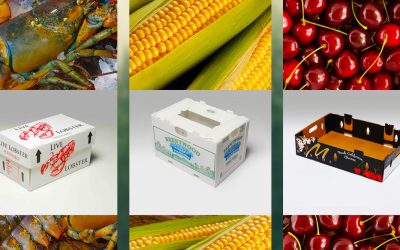
Safety and shipping requirements vary by industry. Produce requires airflow, freshness, and hygiene. Seafood requires durability in high-moisture cold chain environments. Industrial goods require protection against moisture-related damage such as corrosion. Lifecycle analysis is essential for comparing single-use and other packaging options.
Custom packaging solutions are often the necessary and best option for complex and/or high-risk supply chains. When packaging for high-humidity environments, standard options or more traditional packaging products may not provide operational efficiency or sufficient protection for products. Therefore, a custom packaging solution might be the best choice.
WHY MOISTURE-RESISTANT PACKAGING IS A STRATEGIC INVESTMENT (NOT JUST A MATERIAL CHOICE)
It’s important to consider the total cost of ownership, not merely the upfront cost when making a choice of moisture-resistant packaging for the cold chain for your brand or when choosing food distribution packaging solutions. Moisture-resistant packaging can reduce hidden costs such as inefficiencies, product damage, and replacement cycles. Operational reliability is immensely important, as is aligning your brand with the desired amount of sustainability. Waste reduction and recyclable packaging systems can support environmental and cost-saving goals. Choosing the right solution can also help you obtain consistent performance results, stabilize outcomes, reduce variability in distribution and even extend shelf life.
When assessing new packaging solutions, it’s important to evaluate any weaknesses that might exist in your current approach. Working with a knowledgeable packaging partner can help you transition your company toward an application-specific solution that will meet your needs and budget constraints more effectively. Contact us to learn more about your custom, application-specific, moisture-resistant packaging solution like polypropylene corrugated plastic packaging.